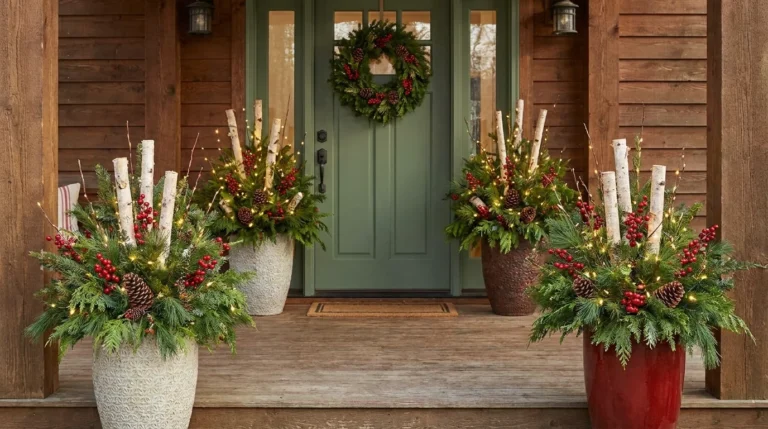
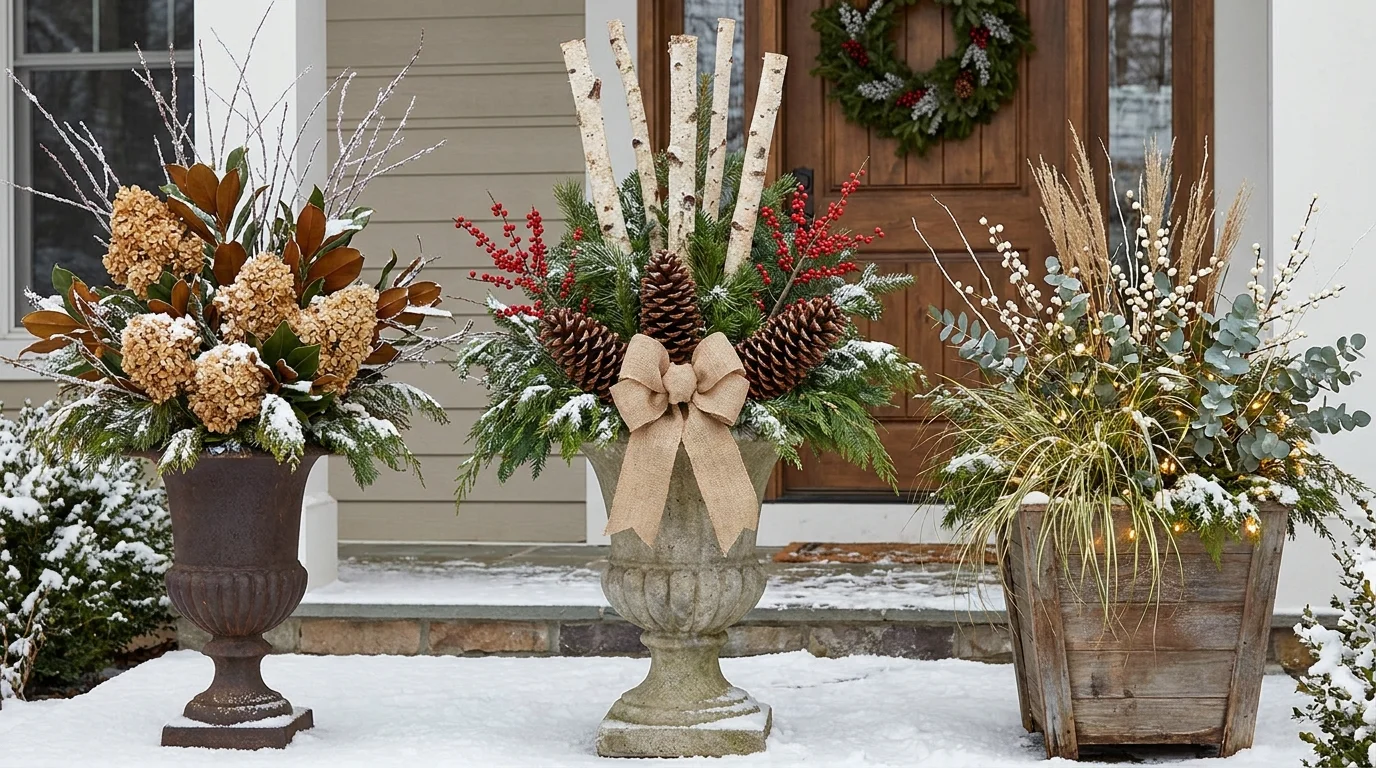
14 Winter Urn Filler Ideas for Outdoor Planters
Winter urns are one of my favorite ways to keep an entryway looking welcoming after the flowers have faded. The right combination of evergreen branches, berries, pinecones, twigs, and seasonal accents can make even a simple outdoor planter feel intentional and beautiful.
I’ve found that the best winter urn filler ideas balance height, texture, and color without making the arrangement feel overcrowded. Below, I’ll share 14 combinations you can recreate in your own outdoor planters, whether you prefer a rustic farmhouse look, classic Christmas style, or a simple natural winter display.
1. Evergreen Branches and Red Berry Stems
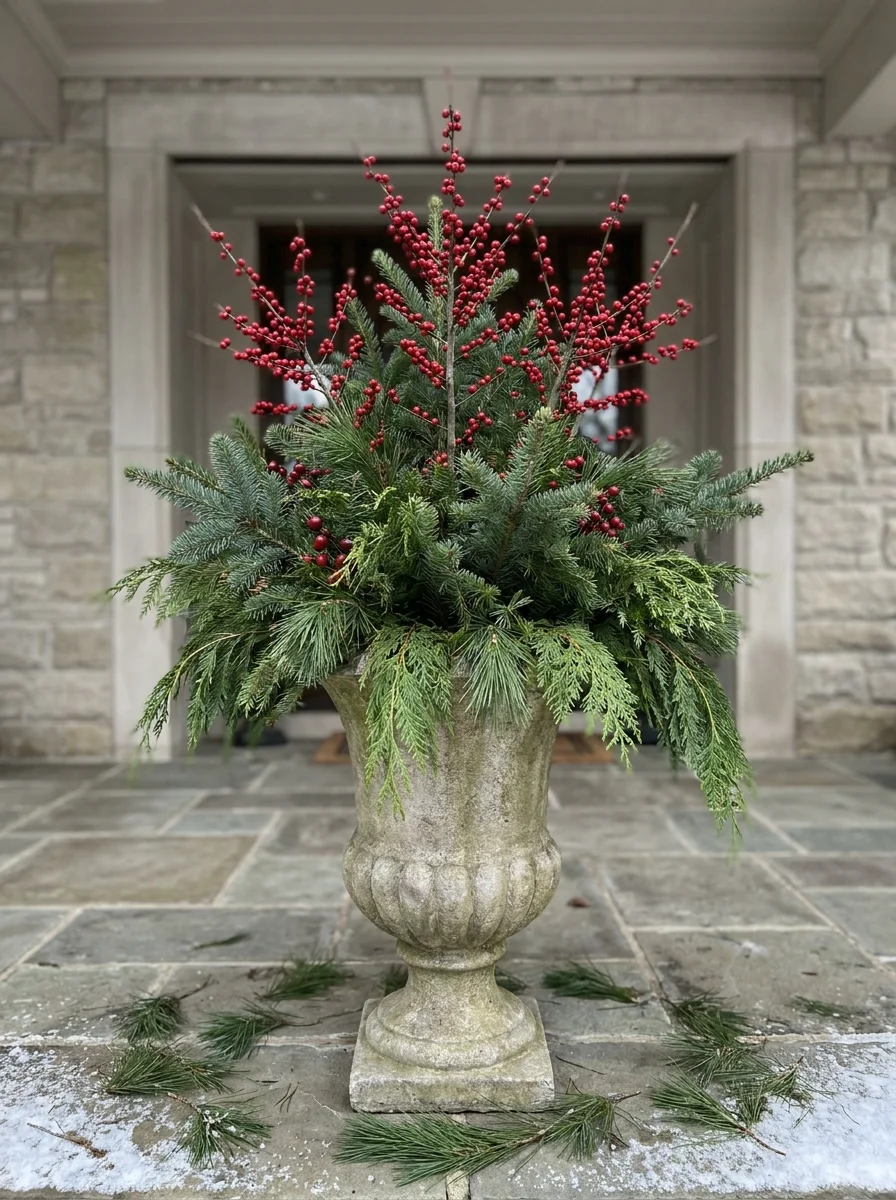
I love starting with evergreen branches because they instantly give a winter urn fullness and structure. Add several red berry stems toward the center for a classic contrast that works beautifully beside a front door. I recommend this combination when you want something festive but still natural, and the layered branches help disguise the soil and create a polished finished look. I would pair it with a simple Christmas front porch for a coordinated entrance.
2. Pine Branches With Oversized Pinecones
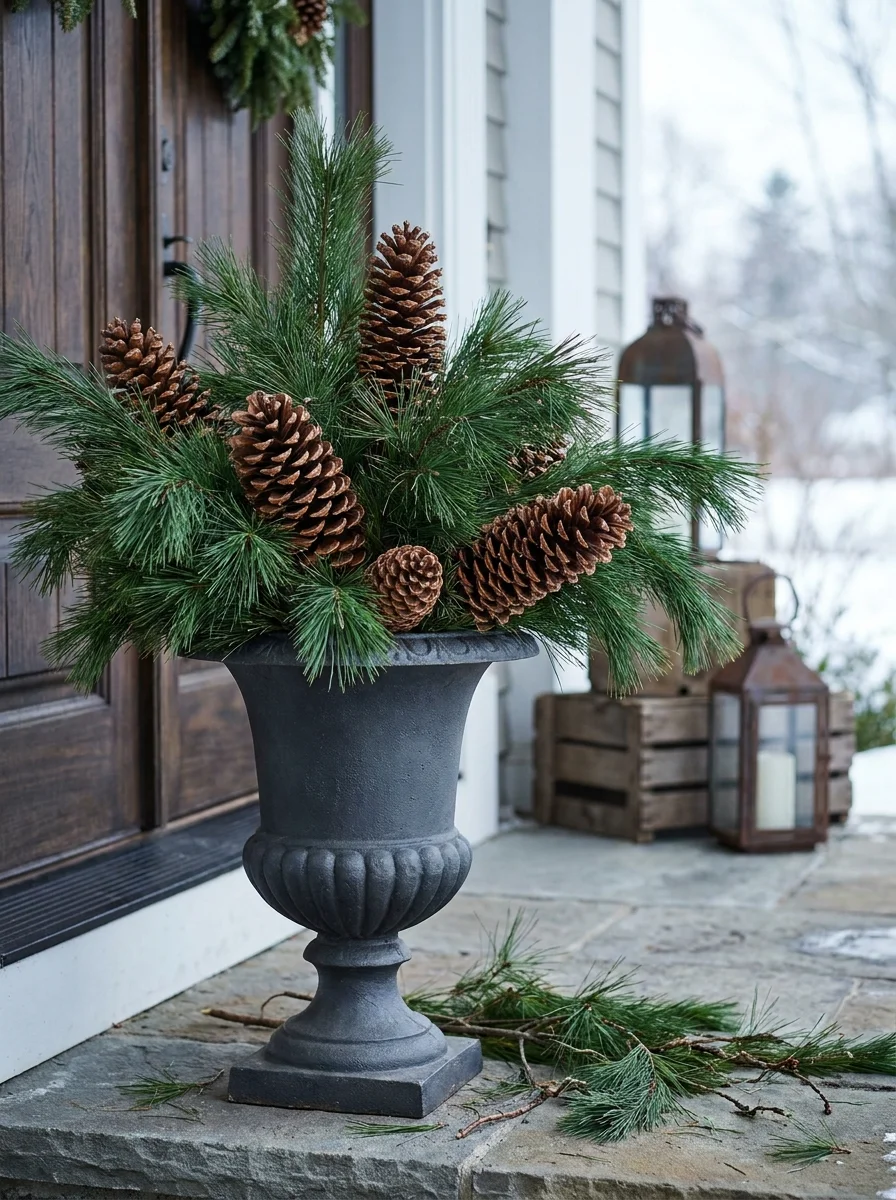
For a more understated winter arrangement, I personally prefer pine branches with plenty of natural pinecones. The earthy brown cones add visual weight without introducing another bright color, making this option especially good for rustic or farmhouse homes. I recommend placing the largest cones near the front where they can be seen easily, while shorter pine pieces fill the gaps around the base.
3. Cedar, Birch Branches, and White Berries
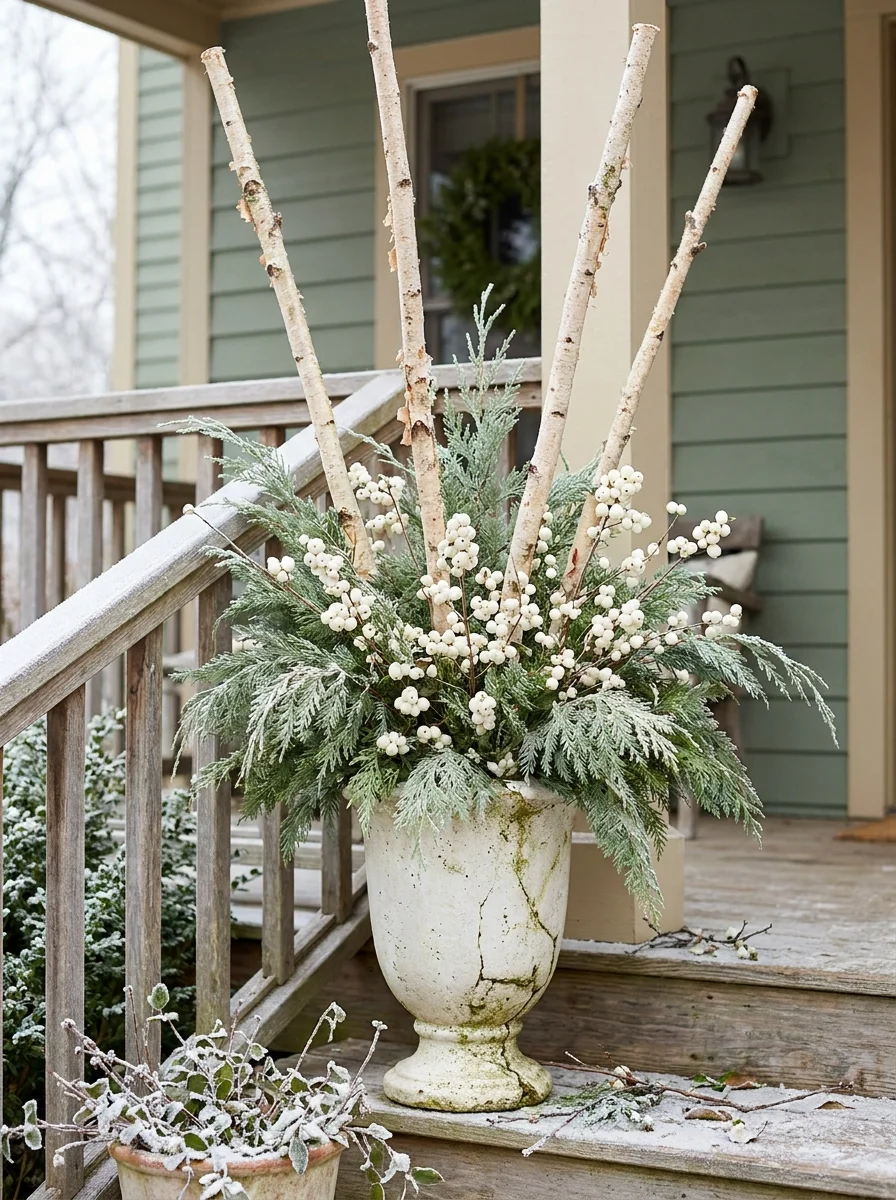
I like this softer combination when red berries feel too Christmas-specific. Cedar creates a graceful, feathery base, while birch branches add height and white berries provide just enough winter color. In my experience, this arrangement looks especially pretty in a pale urn because the bark and berries blend naturally with the container instead of competing with it. It is also easy to keep in place through the entire winter season.
4. Flocked Evergreen and Silver Accents
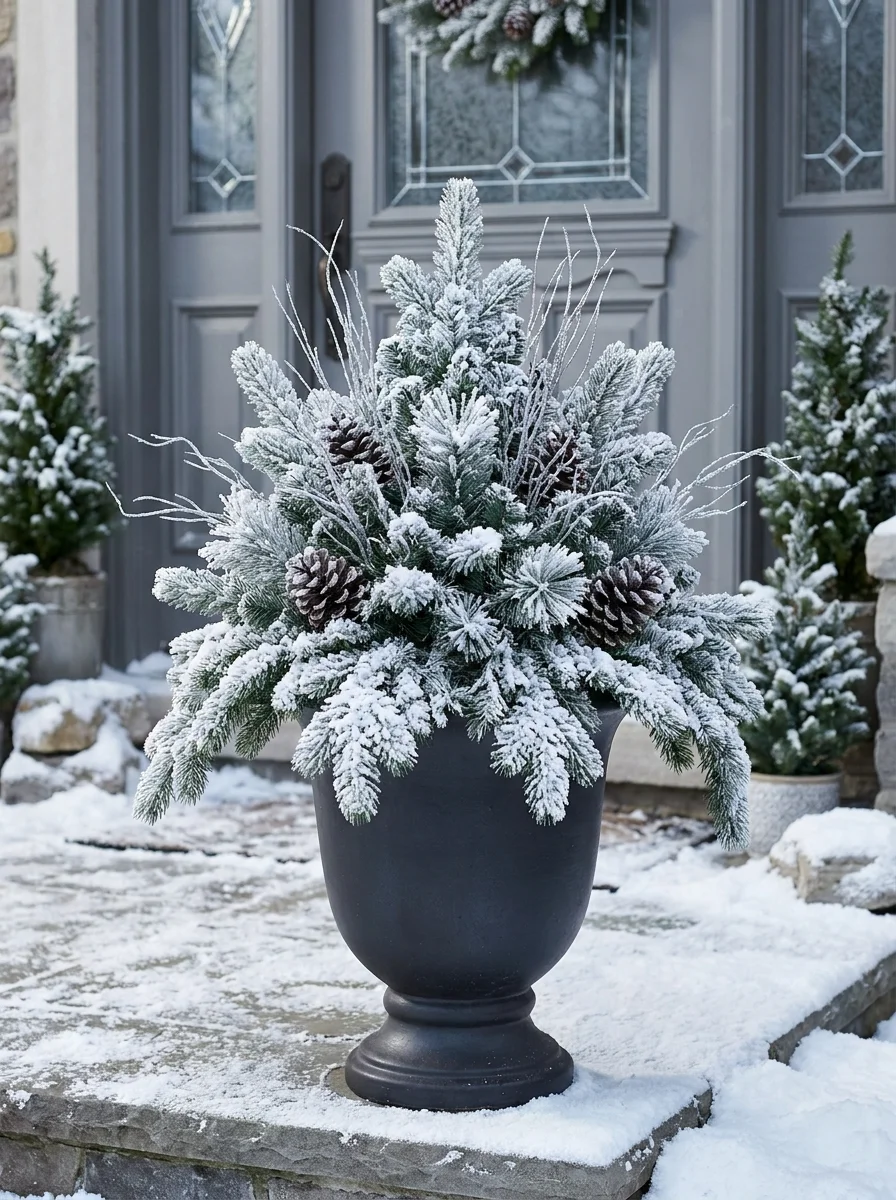
When I want a more elegant winter look, I reach for flocked evergreen and restrained silver accents. The snowy finish gives the arrangement a frosty appearance without requiring a lot of extra decoration. I recommend keeping the metallic elements subtle so the greenery remains the star. This style works particularly well with charcoal, black, gray, or white urns and looks beautiful against a simple neutral exterior.
5. Magnolia Leaves With Evergreen Sprigs
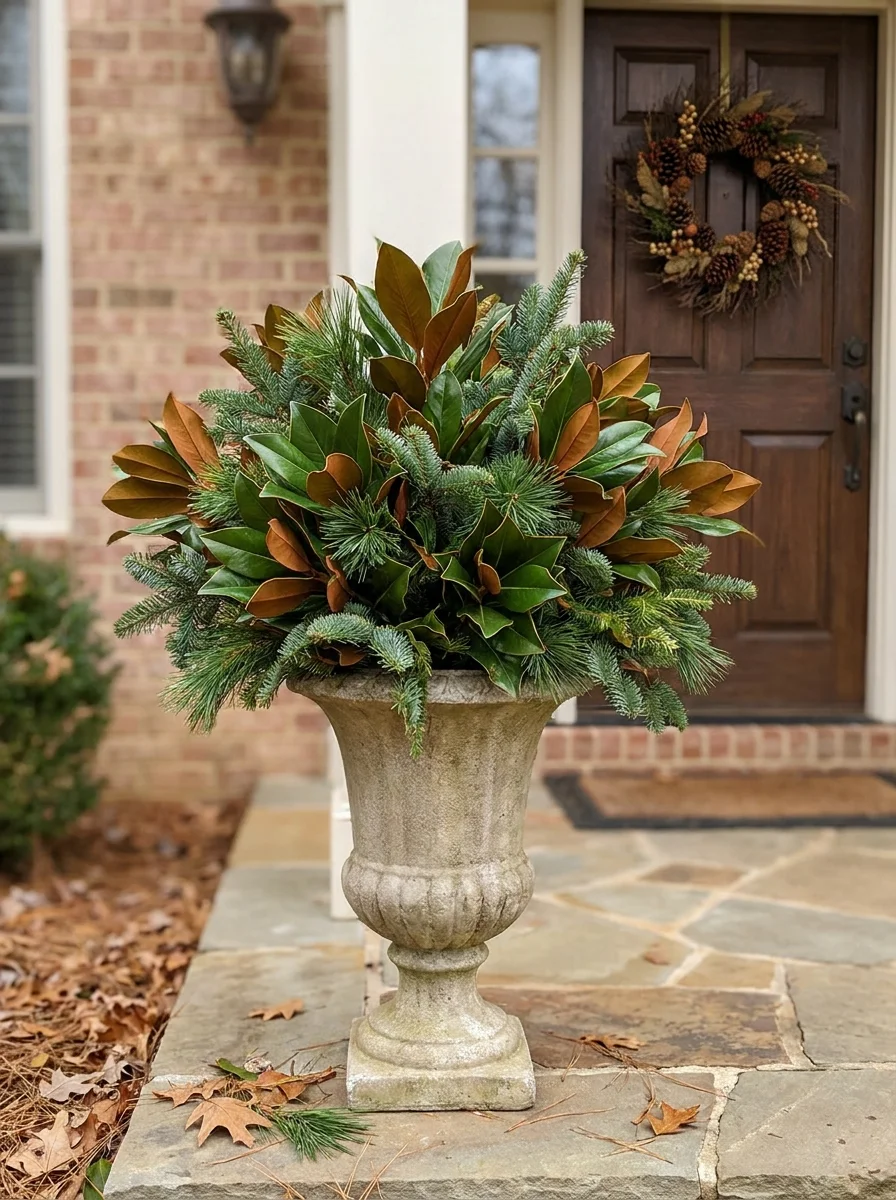
Magnolia leaves give winter urns a richer, more traditional texture than fine evergreen needles alone. I like mixing their broad glossy leaves with pine or fir branches so the arrangement has different shapes from every angle. I recommend this filler when you’re decorating a formal entrance because it feels substantial and elegant without relying heavily on ornaments, lights, or bright holiday colors.
6. Red Twig Dogwood and Evergreen Boughs
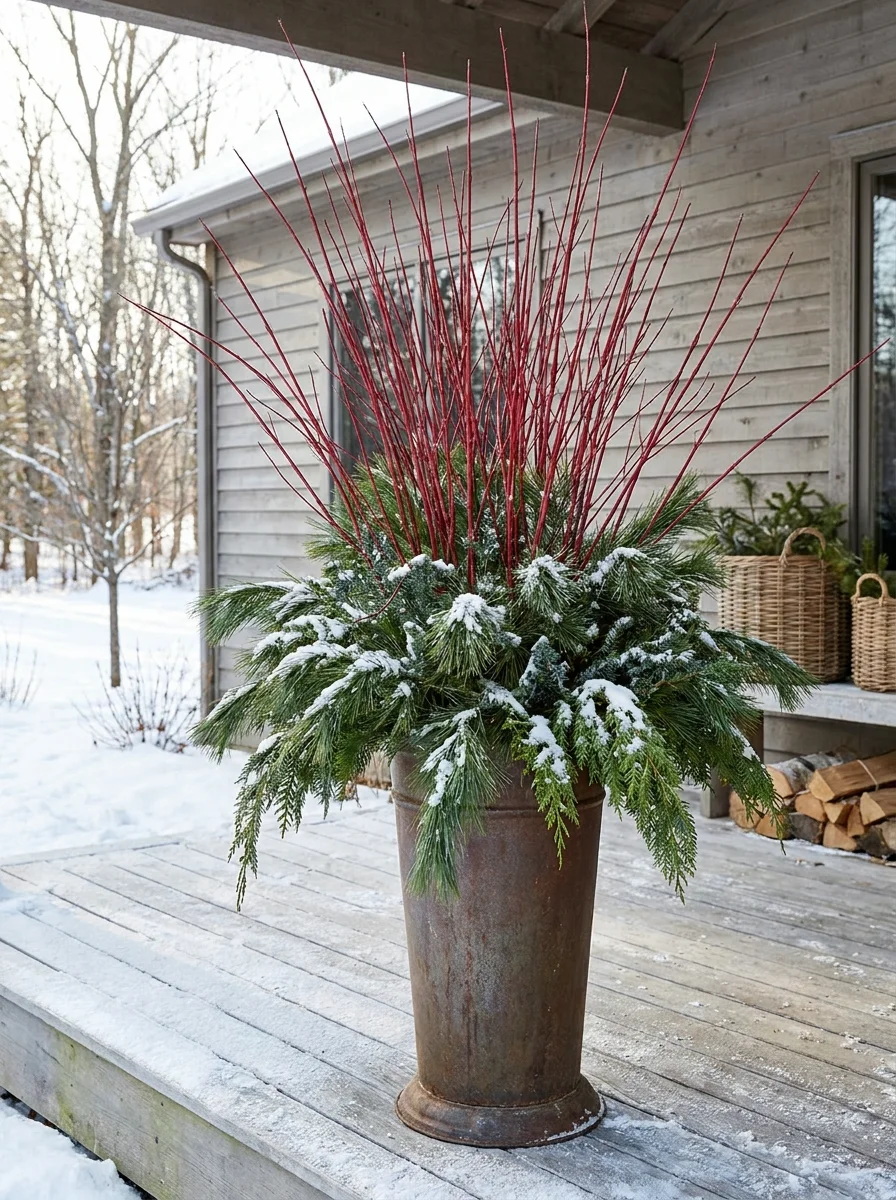
Red twig dogwood is one of my favorite fillers when an urn needs height without a large centerpiece. The slender red stems create strong vertical lines above the evergreen base, making the whole arrangement feel taller and more dramatic. I recommend this idea for large planters beside garage doors or entryways because the branches remain visually interesting even when viewed from a distance.
7. Eucalyptus, Pine, and Natural Cotton Stems
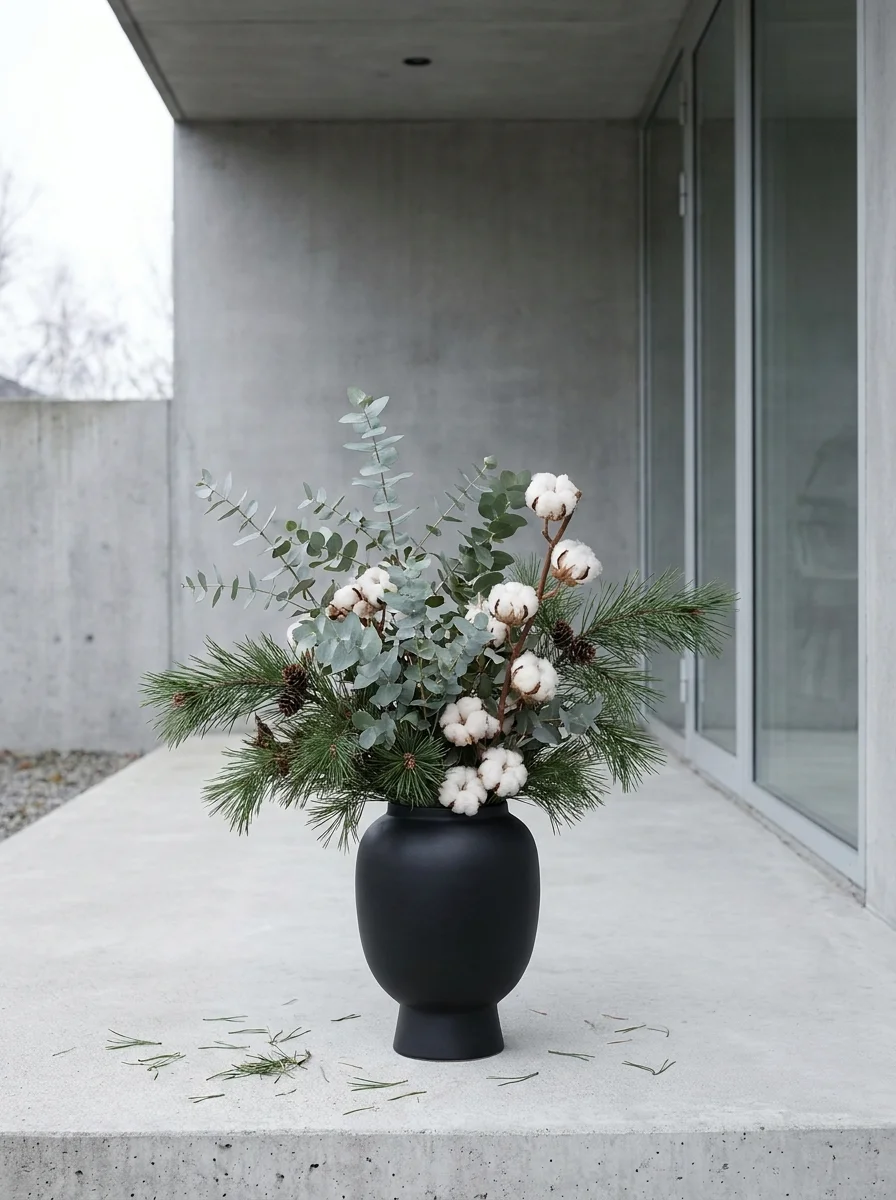
For a softer modern arrangement, I like combining eucalyptus with pine and natural cotton stems. The silvery foliage keeps the display feeling wintry while the cotton adds a cozy touch that works well after Christmas. I recommend this filler for contemporary homes where traditional red berries or bright ornaments might feel too busy. A simple black or charcoal planter makes the muted colors stand out beautifully.
8. Mixed Evergreen Cuttings With Birch Logs
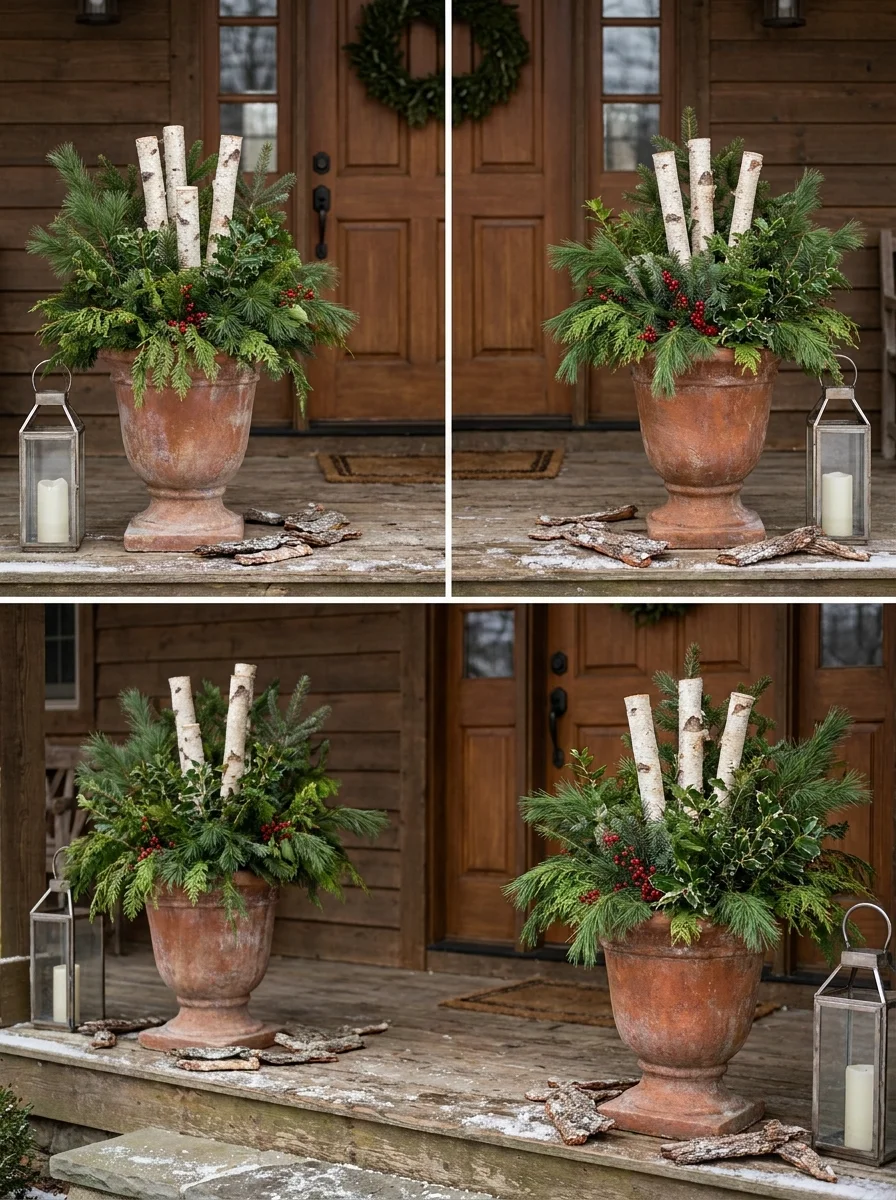
I often use short birch logs when an urn needs a little more substance and height. They look especially good surrounded by several types of evergreen because the pale bark breaks up all the green. I recommend grouping the logs slightly off-center rather than making a rigid bundle. The result feels more natural, and the irregular shapes make each planter look handcrafted rather than overly arranged.
9. Evergreen, Cedar, and Red Cardinal Accents
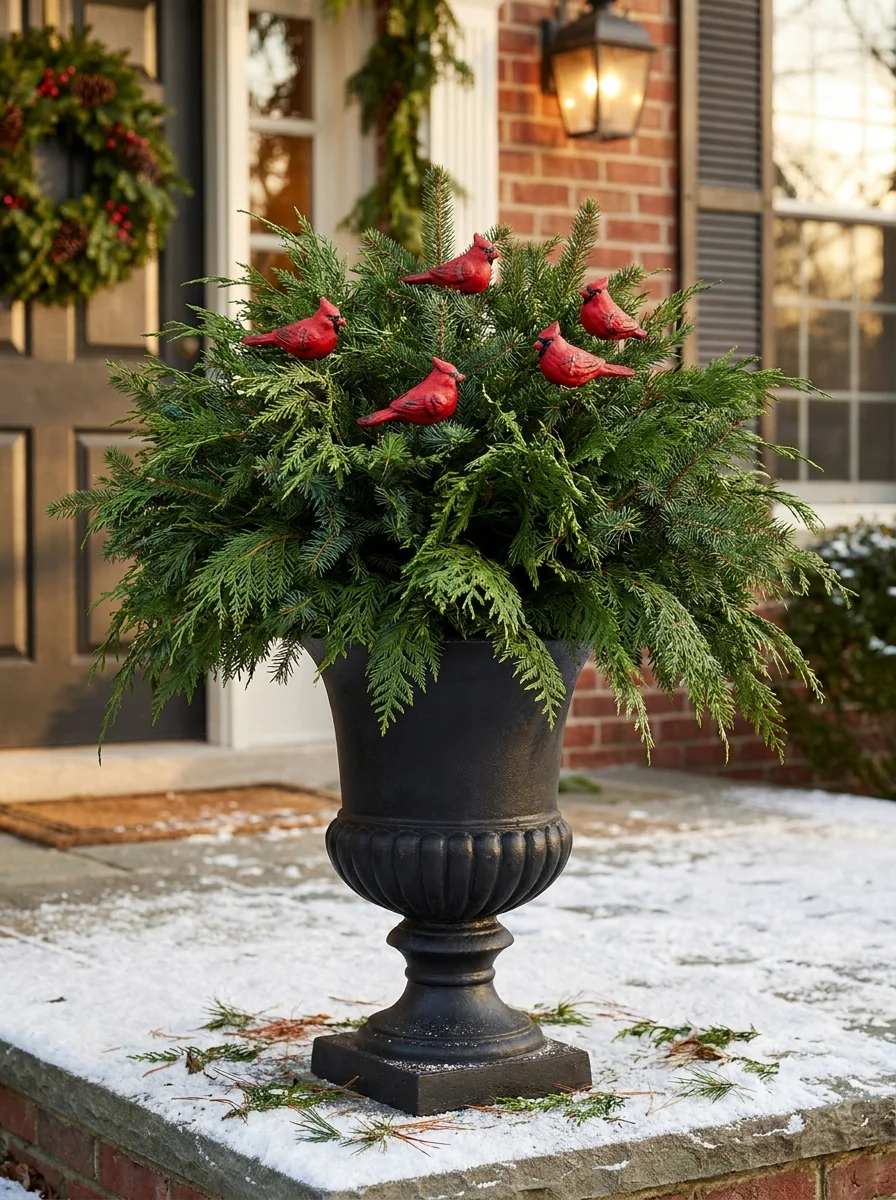
Small cardinal accents add personality without taking over the arrangement. I especially like placing just two or three red birds among evergreen and cedar so they look like little discoveries rather than the main decoration. This is a great choice if you want a classic Christmas feel that can transition into January. I would keep the rest of the urn natural and let the bright red details provide the focal points.
10. Trailing Pine With Berry Clusters
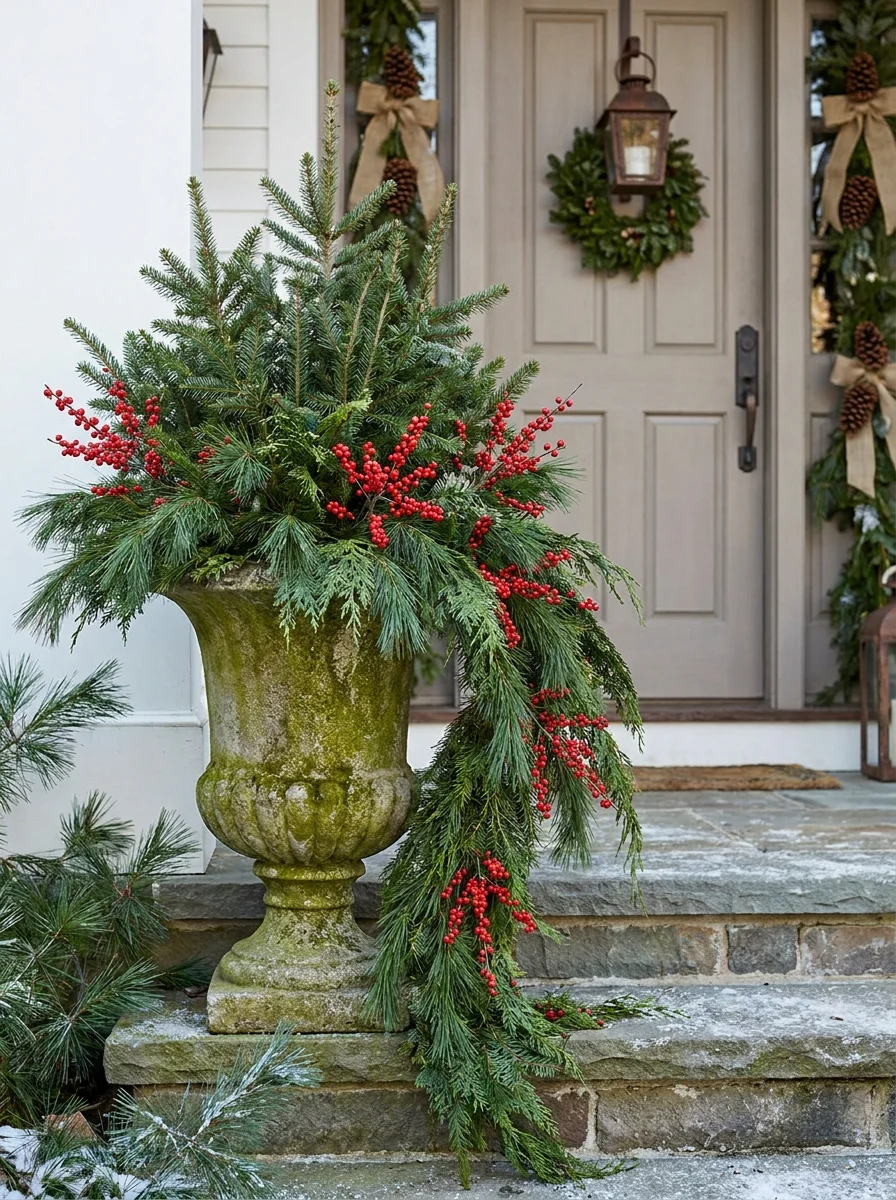
Trailing greenery is useful when you want an urn to look abundant from the sides as well as from the front. I like using longer pine pieces around the outside and keeping the taller branches in the center. Berry clusters tucked into the cascading foliage add a cheerful winter accent. This arrangement works particularly well on steps where people can appreciate the planter from several angles.
11. Silver Fir, Pinecones, and Frosted Berries
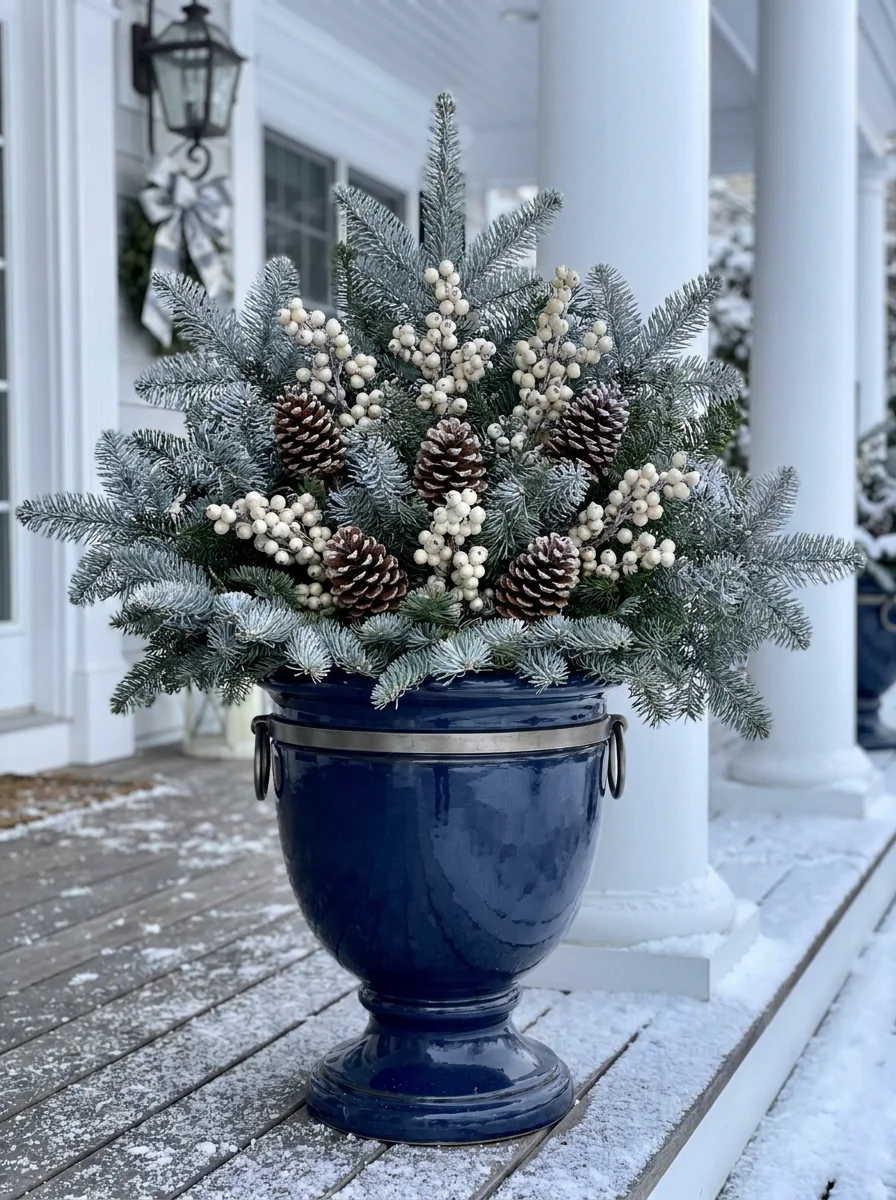
Silver fir brings a naturally cool tone that looks beautiful with frosted berries and pinecones. I recommend this combination when you want your winter urn to feel elegant rather than overtly festive. The muted colors also photograph beautifully on snowy days. I like allowing a few pinecones to remain exposed instead of hiding them inside the greenery because their warm brown color keeps the arrangement from feeling too monochromatic.
12. Evergreen With Warm White Lights
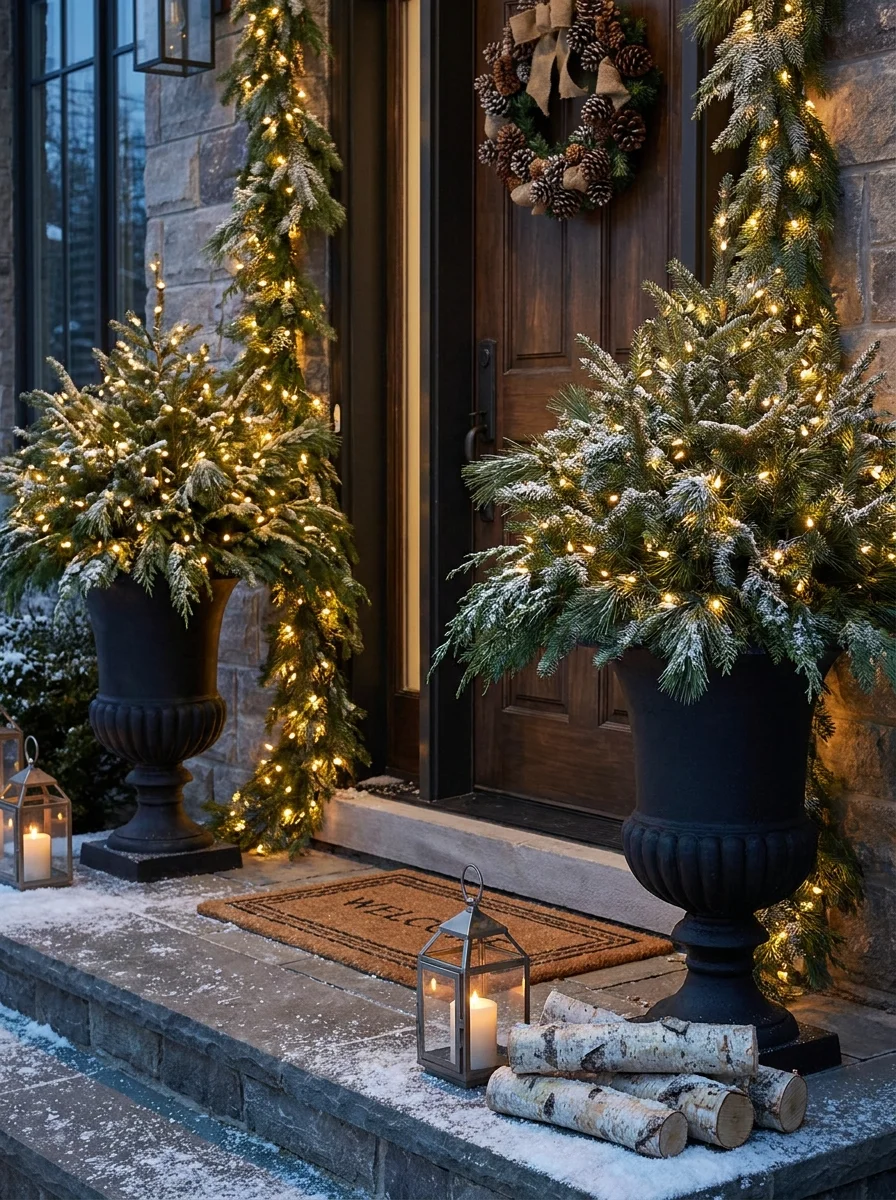
For evening curb appeal, I love adding warm white lights to a simple evergreen-filled urn. The greenery provides the structure while the tiny lights create a welcoming glow after dark. I recommend using lights sparingly so the arrangement still looks natural during the daytime. A pre-lit evergreen garland can also be tucked through the branches when you want an easier decorating option.
13. Rustic Evergreen With Burlap and Pinecones
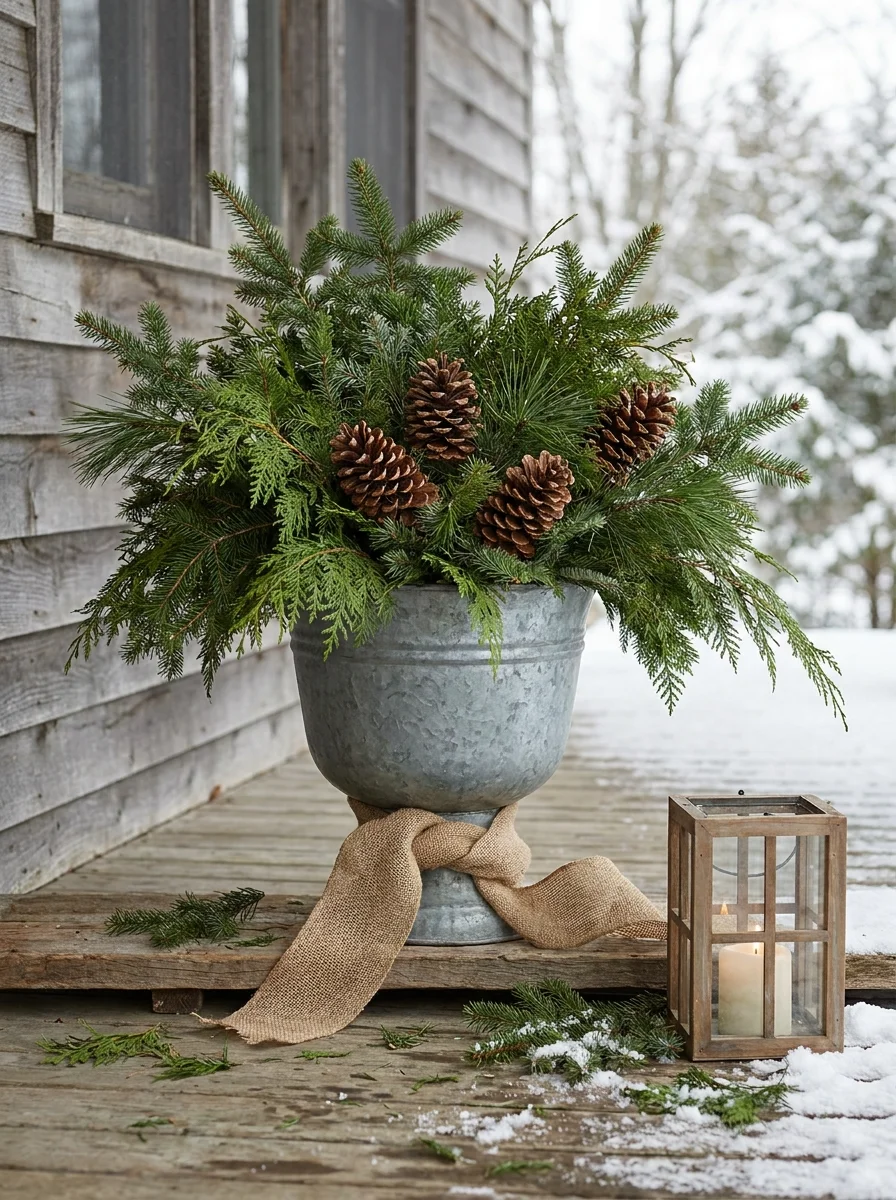
I prefer burlap when I’m decorating a farmhouse-style porch because it adds warmth without making the urn feel overly polished. Pair it with evergreen branches and a few pinecones, then let the ribbon hang naturally rather than tying a perfect bow. This filler is inexpensive-looking in the best possible way and works especially well with galvanized, wooden, or aged metal planters.
14. Classic Evergreen, Pinecones, and Red Berries
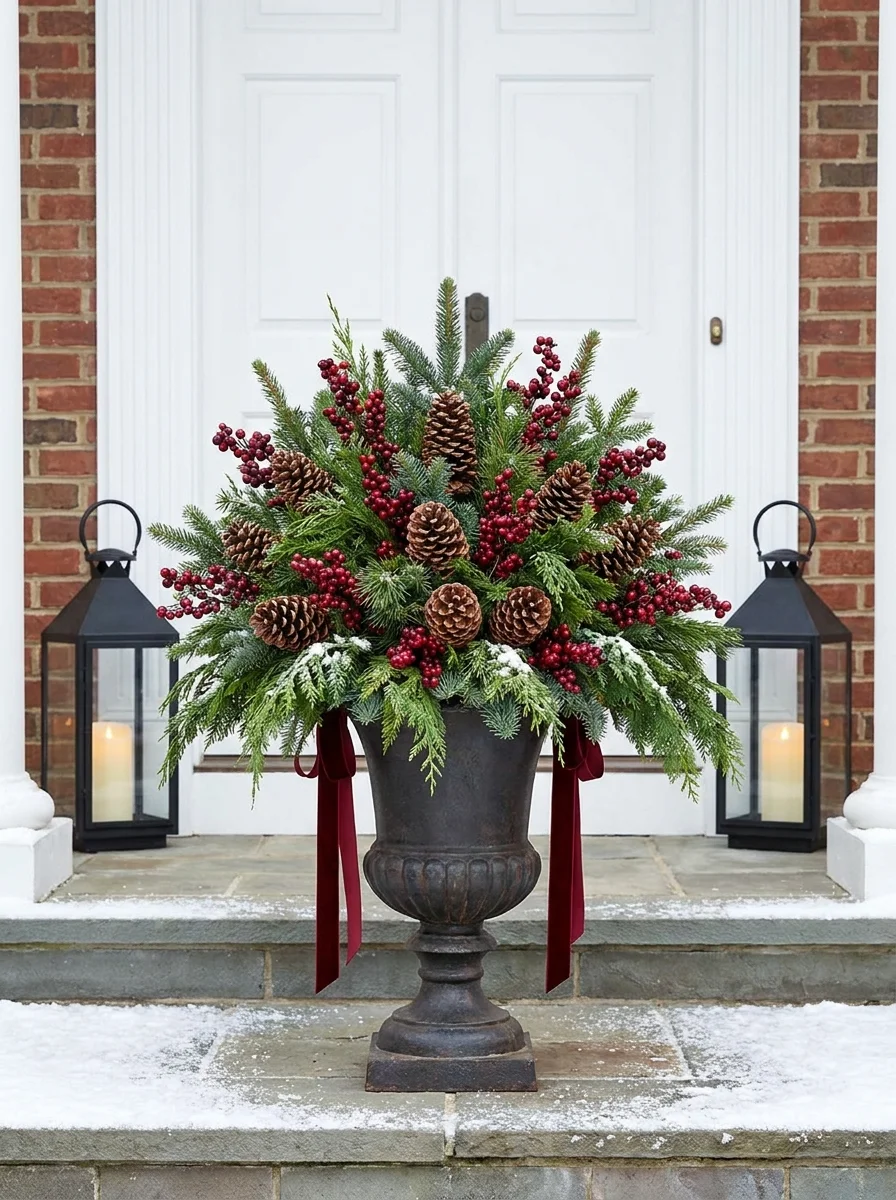
When I want a timeless winter urn that works from December through the heart of winter, this is the combination I come back to. Evergreen provides the foundation, pinecones add natural texture, and red berries bring just enough color. I recommend using several branch lengths so the filler looks layered and relaxed. It is a particularly easy choice for matching winter front porch decor.
Comparison Table
| Item | Key Features | Pros | Cons |
|---|---|---|---|
| Evergreen and Red Berries | Greenery and bright berries | Classic, colorful | More Christmas-focused |
| Pine and Pinecones | Natural rustic texture | Simple, earthy | Limited color |
| Cedar, Birch and White Berries | Soft neutral palette | Elegant, versatile | Less traditional |
| Flocked Evergreen | Snowy silver finish | Elegant winter look | Flocking can shed |
| Magnolia and Evergreen | Glossy broad leaves | Traditional, substantial | Less rustic |
| Red Twig Dogwood | Tall red branches | Excellent height | Needs sturdy branches |
| Eucalyptus and Cotton | Muted modern textures | Soft, contemporary | Less festive |
| Birch Logs and Evergreen | Vertical birch accents | Rustic, architectural | Requires heavier filler |
| Cardinal Accents | Bird decorations and greenery | Charming, colorful | More decorative |
| Trailing Pine and Berries | Cascading greenery | Full from all sides | Needs longer cuttings |
| Silver Fir and Frosted Berries | Cool silver tones | Refined, wintry | Muted color palette |
| Evergreen and Lights | Warm white illumination | Beautiful at night | Needs power or batteries |
| Evergreen, Burlap and Pinecones | Farmhouse materials | Warm, inexpensive style | Casual appearance |
| Evergreen, Pinecones and Berries | Classic layered filler | Timeless, versatile | Common traditional style |
Recommended Products
National Tree Company Pre-Lit Artificial Christmas Garland
I recommend this pre-lit garland when you want to add realistic-looking evergreen fullness and lighting to a large urn. It works particularly well for covered entryways where an extension cord is practical. The pinecones and berry clusters also make it useful as a ready-made filler that needs very little additional decoration.
National Tree Company Pre-Lit Artificial Christmas Wreath
I like using this wreath creatively by partially separating its greenery or positioning it around the top of a wide planter. It is especially useful when you want coordinated greenery with pinecones and berries without sourcing every decorative element separately. It works best for broad urns and larger containers that can accommodate its fuller shape.
National Tree Company 24 in. Pre-Lit Crestwood Spruce Christmas Wreath with LED Lights
This is a practical choice for anyone who wants a fuller seasonal accent with built-in lighting. I would use it as a supporting filler around a larger evergreen centerpiece or adapt the greenery for a wide urn. It suits traditional entrances particularly well and can coordinate with other winter greenery around the porch.
FAQs
What can I put in an outdoor urn for winter?
I like using a combination of evergreen branches, cedar, pinecones, birch branches, berries, and decorative twigs. Start with a few tall pieces for height, add fuller greenery around the center, and finish with smaller accents around the rim. The best combination depends on your planter size, porch style, and whether you want a Christmas-specific or all-winter display.
How do you keep winter urn fillers in place?
I usually push sturdy evergreen stems directly into the existing soil or a firm filler inside the urn. For lightweight decorative branches, I use several pieces together so they support one another. Heavy evergreen cuttings are naturally easier to stabilize. If your area gets strong winter winds, choose a heavier container and keep the tallest branches closer to the center.
Can you leave evergreen branches in outdoor planters all winter?
Yes, evergreen cuttings are commonly used in winter porch pots. I prefer fresh branches because they provide natural texture and can remain attractive for much of the cold season. The University of Minnesota Extension notes that porch pots can last through winter and that spruce tips can be inserted into soil to help keep them from drying out.
How do I make a winter urn look fuller?
I build the arrangement in layers rather than placing everything at the same height. Start with taller branches in the middle, add medium-length evergreen pieces around them, and finish with trailing greenery along the rim. I also like mixing textures, such as smooth birch bark, rough pinecones, and fine evergreen needles, because different shapes make a planter look naturally abundant.
Should winter urns be watered?
If you’re using live plants rather than cut branches, watering needs depend on the plant and local weather. For cut evergreen arrangements, the needs are different, especially once the soil freezes. I always check the container during warm, dry periods and avoid letting standing water collect in a planter that could freeze and damage the container.
For additional guidance on selecting and protecting evergreens in cold conditions, I recommend this winter greenery and porch pot guidance from the University of Minnesota Extension.